
Google Ads Keywords in Malaysia: Match Types, Intent and Negative Keywords
A useful keyword strategy is not the longest list. It connects real customer language with a focused offer, suitable reach and a disciplined review of the searches that actually trigger ads.
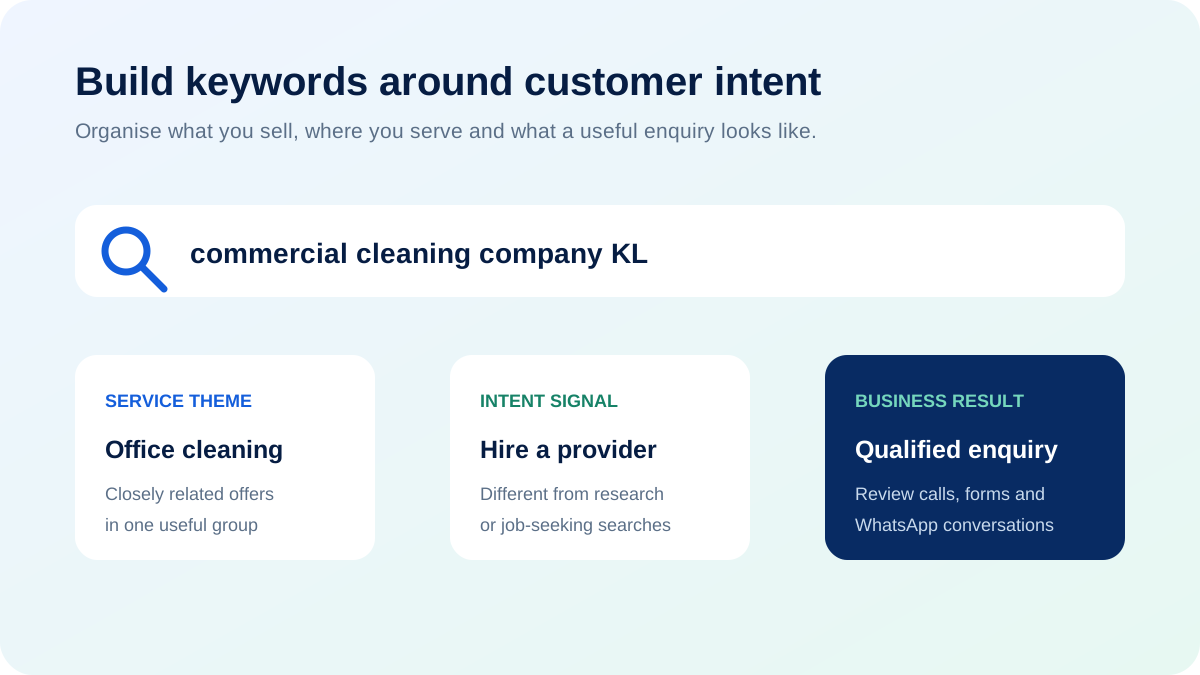
What keywords do in a Search campaign
Google Ads keywords are words or phrases used to match advertisements with searches. They help define the demand a campaign is prepared to enter, but they are not a fixed list of every query an advertisement may receive.
Google explains that modern keyword matching considers meaning as well as syntax. That makes campaign context important: the other keywords in an ad group, landing pages, previous searches and additional account signals can influence matching, particularly when broader reach is used.
Start with commercial intent, not volume alone
A high-volume phrase can be commercially weak, while a lower-volume phrase can describe a specific need. For example, a cleaning company may see very different value in searches for "cleaning jobs", "how to clean an office" and "office cleaning company Kuala Lumpur".
Before selecting keywords, define the service, customer, location and useful next action. Then separate likely buying intent from research, employment, education, free resources, unrelated products and services the business cannot deliver.
- Service intent: what the person needs.
- Commercial intent: whether they appear to be comparing or hiring.
- Location intent: where the service must be available.
- Fit: whether the business wants and can handle that enquiry.
Build compact, useful keyword themes
Closely related keywords should usually sit with advertisements and landing content that answer the same need. A supplier offering industrial ventilation, kitchen exhaust systems and residential air-conditioning may need separate themes because the buyers, language and proof differ.
Useful themes can be organised by core service, problem, customer type or location when those differences materially change the message. Avoid creating tiny groups that add administration without improving relevance, and avoid combining unrelated services merely to simplify setup.
Broad, phrase and exact match
Google provides broad, phrase and exact match. Exact gives the narrowest relationship, phrase reaches all exact-match queries and more, while broad reaches all phrase and exact queries and more. The names do not mean that wording must always be identical.
| Match type | Potential use | Management consideration |
|---|---|---|
| Exact | Focus on searches closely related to the keyword meaning. | Can be useful where budget or risk requires tighter reach. |
| Phrase | Reach additional related searches while retaining a meaningful relationship. | Review actual terms because the wording can vary. |
| Broad | Use wider signals to find related demand beyond phrase and exact. | Benefits from accurate conversion data, suitable bidding and active review. |
The right approach is account-specific. A new campaign with untested conversion measurement may need a different starting point from a mature campaign with reliable qualified-lead data.
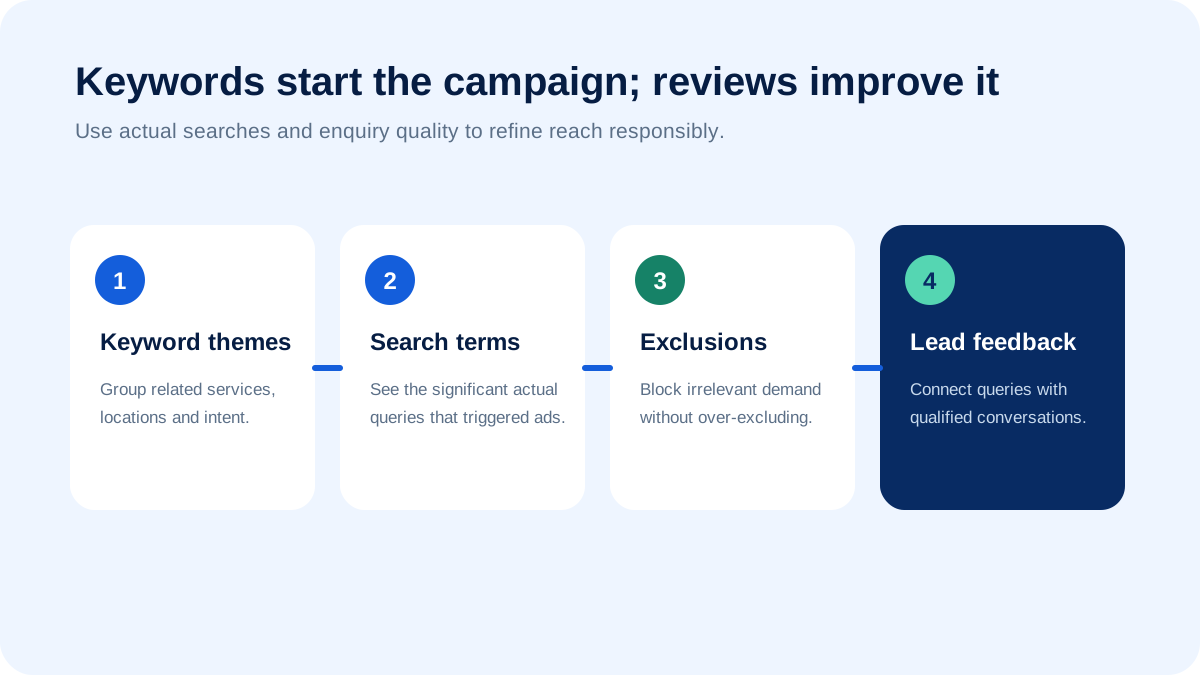
Use the search terms report as evidence
The search terms report shows significant actual searches that triggered advertisements. It can reveal useful new language, unexpected demand and searches that appear related to a keyword but do not fit the offer.
Do not judge a term from one word alone. Read the full query, campaign context, performance period and subsequent enquiry quality. A phrase that looks relevant may generate poor conversations; an unfamiliar phrase may describe a valuable niche need.
Negative keywords: control without over-blocking
Negative keywords prevent ads from serving for selected searches and help focus the campaign. Common categories include jobs, training, free downloads, do-it-yourself instructions, unsuitable locations and services the advertiser does not offer.
Google notes that negative match types behave differently from positive match types and do not automatically cover close variants or other expansions. Singular, plural and related forms may need separate consideration. Overly broad exclusions can also remove useful searches, so additions should be reviewed rather than treated as harmless housekeeping.
Malaysia: language, spelling and location
Malaysian searches may use English, Bahasa Malaysia, abbreviations, neighbourhood names and mixed-language phrasing. Include a language only when advertisements, landing content and enquiry handling can support it clearly. A single campaign should not promise a language experience the business cannot provide.
Location words in keywords do not replace campaign location settings. Someone outside Kuala Lumpur can search for a Kuala Lumpur service, while someone inside the city may omit the place name. Use keyword intent and geographic targeting together, then confirm whether leads come from serviceable areas.
A practical keyword review checklist
- Confirm the offer and desired enquiry before researching keywords.
- Group closely related searches around one clear message.
- Choose match types according to data quality, budget and risk.
- Review search terms, not only keyword-level totals.
- Add negative keywords carefully and document material changes.
- Compare search terms with qualified calls, forms and conversations.
- Separate language or service themes when the message genuinely changes.
- Keep landing-page content aligned with the search promise.
Keyword work is a continuous feedback loop. The goal is not to control every word a person types; it is to participate in relevant demand, learn from actual searches and reduce activity that does not support the business.
Frequently asked questions
Which Google Ads keyword match type is best?
How often should search terms be reviewed?
Do negative keywords block close variants?
Should Malaysian campaigns include English and Bahasa Malaysia keywords together?
Sources and further reading
Product details were checked on 14 August 2026 using official Google Ads Help.