
How Much Should You Spend on Google Search Ads?
Choose a starting budget from business value, relevant search demand and your ability to follow up—not from a universal Malaysian benchmark.
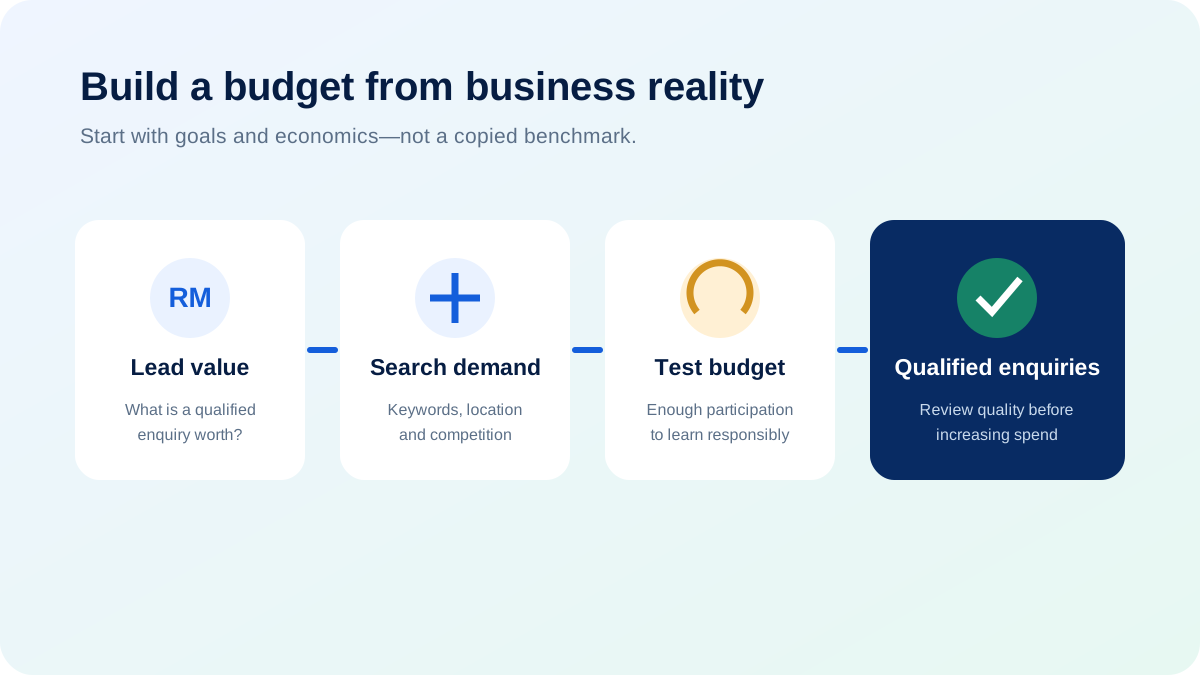
So, what is a sensible starting budget?
There is no single answer for every Malaysian business. A useful starting budget should allow your campaign to participate in relevant searches while remaining financially comfortable enough to test, learn and improve.
Do not choose a budget only because another company spends that amount. Its keywords, locations, conversion rate, margins and sales process may be completely different.
How Google Ads campaign budgets work
Google Ads uses an average daily budget for each campaign. Google currently explains that a monthly figure can be estimated by multiplying the average daily budget by 30.4. Daily spend may be as much as twice the average daily budget when traffic is stronger, while the monthly charging limit protects the full period when the budget remains unchanged.
Budget is not the same as a bid. The budget limits how much the campaign can spend over time; bidding influences how the campaign competes in individual auctions.
A practical budget-planning method
1. Define a qualified enquiry
Decide what should count: a completed form, a connected call, a meaningful WhatsApp conversation, a booked appointment or another agreed action. A button click alone may not be a qualified lead.
2. Estimate commercial value
Consider your average sale, gross margin, closing rate and customer lifetime value where available. Use conservative internal numbers rather than optimistic assumptions.
3. Review keyword forecasts
Google Keyword Planner can provide forecast ranges for clicks, impressions or conversions based on keywords, spend and other settings. Forecasts are planning aids, not guarantees.
4. Narrow the scope
A focused service, location and schedule can use a modest budget more meaningfully than trying to cover every offering across Malaysia at once.
5. Plan the learning period
Give the campaign enough time to observe search terms, tracking quality and lead feedback. Avoid judging a long sales cycle from only a few days.
Illustrative RM budget scenarios
These figures demonstrate planning choices. They are not Malaysian CPC averages, recommendations or promises.
| Ad budget | Possible test scope | Main risk |
|---|---|---|
| RM1,500/month | One focused service and narrow location. | Slow data collection if clicks are expensive. |
| RM3,000/month | A broader set of high-intent terms in a defined market. | Weak pages or tracking can still waste spend. |
| RM6,000/month | Greater auction participation for a proven offer. | Scaling before confirming lead quality. |
Suppose an illustrative RM3,000 budget produced 150 clicks and 12 recorded enquiries. Average CPC would be RM20 and cost per recorded enquiry RM250. Those calculations do not tell you how many leads were qualified or became customers.
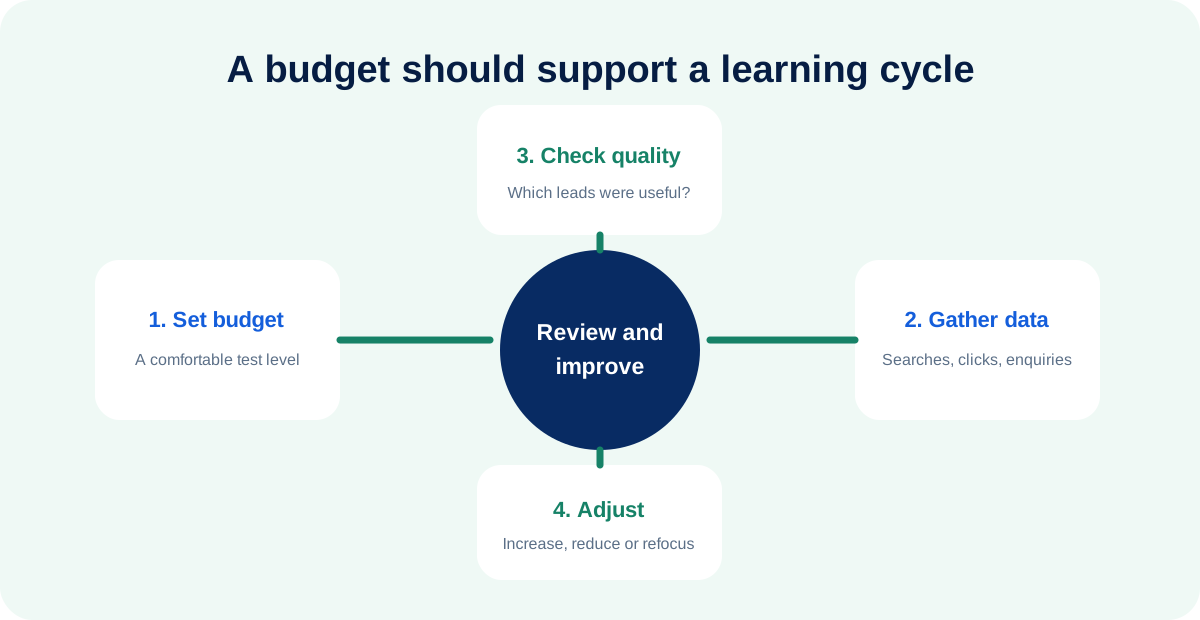
How do you know whether the budget is enough?
Look for evidence rather than a fixed minimum:
- Is the campaign losing meaningful traffic because the budget is limited?
- Are relevant searches available at the selected locations and times?
- Does the campaign collect enough clicks and enquiries to identify patterns?
- Are irrelevant search terms being excluded?
- Can the team respond quickly and report lead quality?
A small budget can work for a narrow market. It may be insufficient for a competitive national campaign. Conversely, a large budget does not repair poor targeting or a weak landing experience.
When should you increase the budget?
Consider increasing spend after tracking is reliable, search terms are relevant, the business can handle more enquiries and lead quality supports the economics. Increase carefully and watch whether cost per qualified enquiry remains acceptable.
Reduce or redirect spend when irrelevant traffic grows, follow-up capacity is limited or the data reveals that another service or location is more valuable.