
AI-Powered Google Search Ads in Malaysia: What Businesses Should Know in 2026
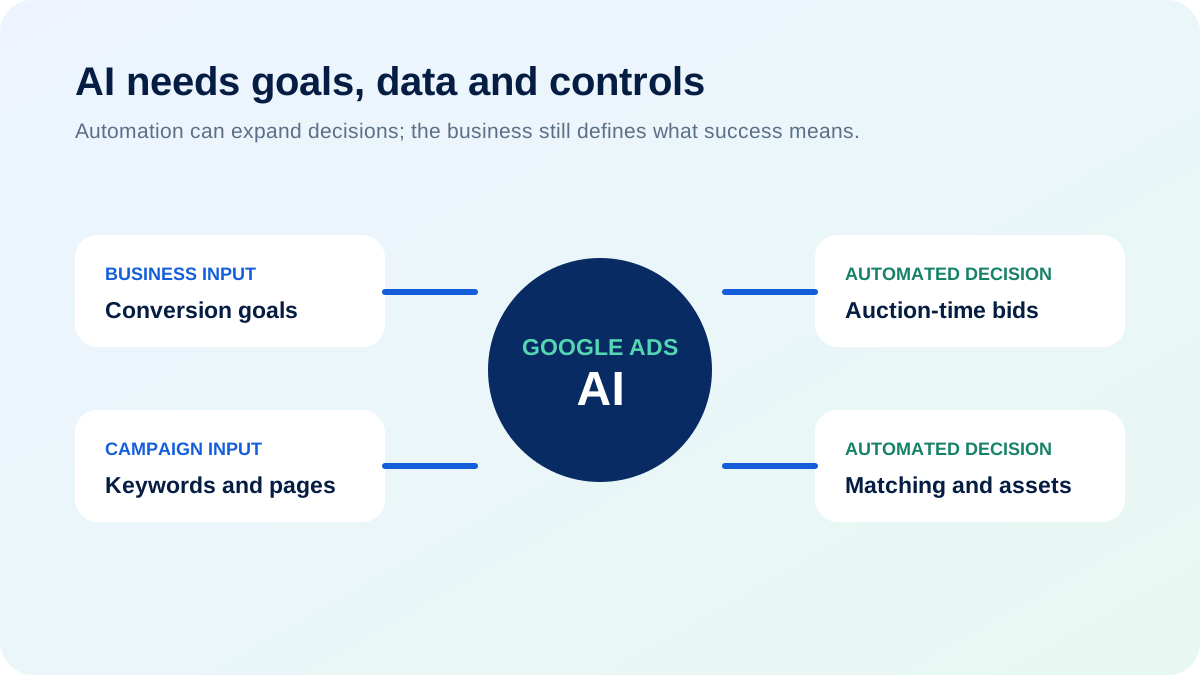
Google AI can assist bidding, search matching and advertisement delivery. It does not decide what a qualified Malaysian enquiry means, which locations the business can serve or whether the underlying measurement is trustworthy.
What AI-powered Search means
Google Ads uses machine learning across bidding, matching and creative delivery. In practice, the system can use auction-time signals to adjust bids, match advertisements with related searches and assemble responsive advertisement assets.
Automation changes how decisions are made; it does not remove business responsibility. The advertiser still defines goals, budgets, locations, landing pages, exclusions and what counts as a valuable result.
Smart Bidding and auction-time decisions
Smart Bidding is Google's group of automated strategies that optimise for conversions or conversion value. Current strategies include Target CPA, Target ROAS, Maximise conversions and Maximise conversion value. Google announced updated Search bidding labels beginning in June 2026, while stating that the underlying bidding behaviour remains the same.
Smart Bidding evaluates signals for each auction. That can reduce the need to maintain many manual bid adjustments, but the strategy still needs an appropriate objective, sufficient opportunity to participate and reliable conversion measurement.
Judge it over a suitable period rather than reacting to individual days. Frequent target, budget or goal changes can make interpretation difficult and may affect learning.
Broad match and expanded search reach
Broad match can reach related searches beyond phrase and exact match. Google recommends pairing broad match with Smart Bidding and responsive search ads in its AI-powered Search guidance.
Wider reach is not automatically useful reach. Review search terms, location quality and real enquiries. A Malaysian business with a limited service area or specialised industrial product may need tighter controls than an advertiser able to serve broad national demand.
Keywords still provide themes and context. Landing pages, other ad-group keywords and additional signals can influence broad matching, so weak site content or mixed service themes can reduce clarity.
Responsive search advertisements
Responsive search ads allow multiple headlines and descriptions. Google can test combinations and adapt delivery to different searches. Advertisers remain responsible for accurate claims, usable combinations and compliance.
Write assets that make sense together. Avoid repeating the same claim in every headline, and do not rely on automated combinations to fix unclear positioning. Pinning can keep certain assets in defined positions, but it restricts combinations and can interact with other automated settings.
What AI Max for Search campaigns does
Google describes AI Max as an optimisation layer for existing Search campaigns, not a new campaign type. Its features include search term matching and asset optimisation, with controls available at campaign and ad-group level.
Final URL expansion can select a more relevant page from the advertiser's website, while text customisation can adapt advertisement text. Google notes that final URL expansion requires text customisation. URL exclusions can prevent traffic from reaching unsuitable pages.
When final URL expansion or URL inclusions choose another destination, pinned responsive-ad assets may not be respected because the selected page may not match the pinned message. Review this carefully when advertisements contain mandatory wording or specific offers.
Conversion data is the foundation
Conversion-based automation needs to know which actions matter. A successful enquiry form, useful call and WhatsApp button click are not necessarily equal. Choose primary conversion actions carefully and keep supporting signals secondary when appropriate.
For lead generation, connect online actions with qualification. If one campaign records many cheap form submissions that are spam or outside the service area, the visible cost per conversion can improve while business value deteriorates.
Enhanced conversions may improve measurement by using hashed first-party data under Google's requirements, but implementation and data-policy obligations need proper review. It is not a substitute for accurate base conversion events.
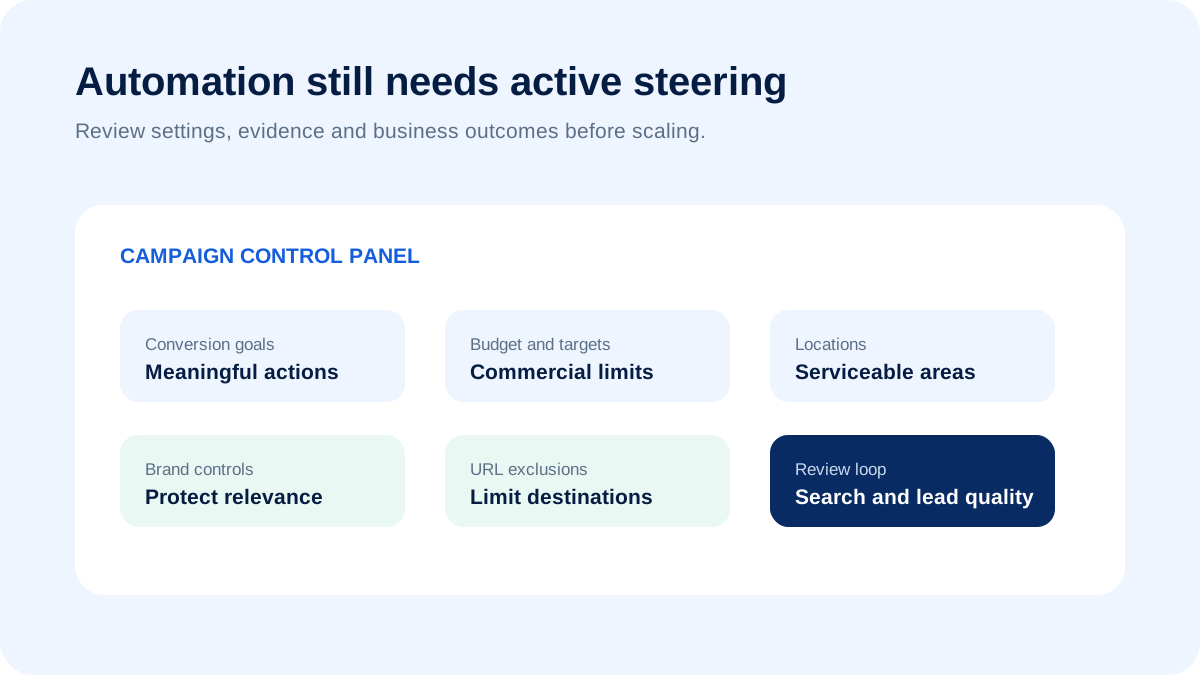
Controls and human reviews still matter
- Conversion goals: define the outcomes used for bidding.
- Budget and targets: set commercial constraints.
- Locations: focus on areas the business can serve.
- Brand controls: manage where brand relationships matter.
- Negative keywords: exclude known unsuitable searches.
- URL exclusions: prevent unsuitable destinations.
- Search-term reviews: understand actual demand reached.
- Lead-quality feedback: connect platform activity with business value.
Automation is not a reason to stop reviewing the campaign. It changes the review from manually setting every bid to defining objectives, inspecting evidence and steering the system.
A responsible way to test AI features
- Confirm conversion tracking and lead definitions first.
- Document the current campaign baseline and business constraints.
- Change one meaningful group of settings at a time where practical.
- Choose a test period appropriate to traffic and sales-cycle length.
- Watch search terms, landing destinations, costs and qualified outcomes.
- Avoid declaring success from a short-lived platform metric.
- Keep a record of settings and dates.
A small campaign does not need to reject automation, but it should not switch on every feature without a measurement plan. Use the level of automation the available data, budget and business risk can support.
Frequently asked questions
Is AI Max a new Google Ads campaign type?
Does AI remove the need for keywords?
Does Smart Bidding need conversion tracking?
Should a new small business enable every AI feature immediately?
Sources and further reading
Product details were checked on 14 August 2026 using official Google Ads Help.